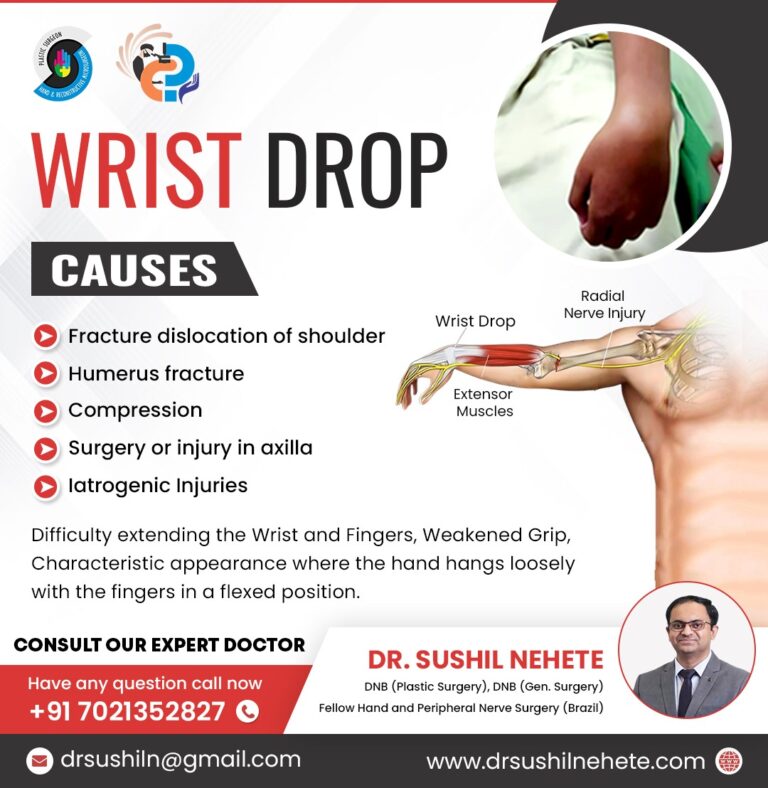
Wrist drop is a condition in which a person cannot lift the wrist and fingers upward due to injury to the radial nerve.
Wrist drop is caused by damage to the radial nerve, which controls the wrist and finger extensor muscles. It can occur due to arm fractures, shoulder dislocation, nerve compression, surgery, or trauma around the armpit region.
Wrist drop can be treated with nerve repair, nerve transfer, or tendon transfer surgeries. A hand surgeon can determine the most suitable treatment based on the severity and duration of the condition.
Nerve repair surgery reconnects or repairs damaged nerves to improve wrist and finger movement. It is usually effective when performed within 4 to 6 months after injury.
Nerve transfer surgery redirects healthy nerves from nearby muscles to restore wrist and finger movement. It is usually considered if recovery does not occur within 8 to 9 months after injury.
Tendon transfer surgery uses healthy tendons to restore wrist and finger lifting function. It is generally performed if nerve repair or nerve transfer is unsuccessful or if wrist drop has been present for more than one year.
Physiotherapy and rehabilitation exercises are important after surgery to achieve the best possible recovery and improve wrist function.
Treatment effectiveness depends on the cause and duration of wrist drop, but surgery can significantly improve wrist and hand function when performed by an experienced surgeon.
As with any surgery, risks may include infection, bleeding, or nerve damage. Your surgeon will explain all possible risks before the procedure.
Recovery time varies depending on the procedure, but it generally takes around 6 to 12 weeks to regain improved wrist function after surgery.
Untreated wrist drop can lead to permanent loss of wrist and finger function, affecting daily activities and quality of life.
Your doctor will evaluate your symptoms, medical history, and test results to determine whether surgery is required after conservative treatment options are considered.
Recovery may include physiotherapy, rehabilitation exercises, and regular follow-up visits to improve strength, mobility, and hand function.
Wrist drop is generally treatable, and timely surgery can help patients regain near-normal wrist and finger movement with a low chance of recurrence.